

Get the free AI Agent Building Blocks ebook when you subscribe:

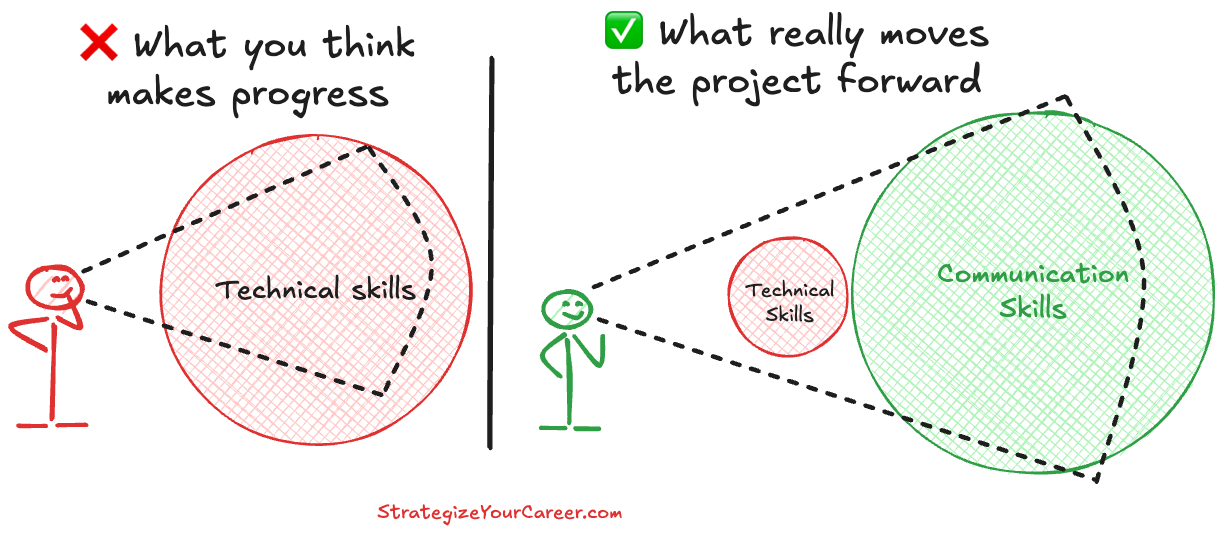
The fastest-growing engineers aren’t just coding experts—they communicate clearly and directly.
In today’s engineering environment, pull requests rarely slow things down. The real delays come from stalled conversations.
Clear communication pushes projects forward and removes obstacles from your path.
In this post, you will find practical steps to adjust your communication style so that silence means progress.
⭐ In this post, you'll learn
How to replace approval-seeking with objection-driven communication
Why setting clear deadlines prevents decision delays
How to structure questions for precise feedback
🔥 #1 Design communication for efficient decision-making
I once advised a mentee who struggled with team engagement. Rather than asking for approval in a general way, she reframed her question to…
…ask for objections. The lack of an answer became an indication that everyone agreed to move forward.
Similarly, I once asked my manager about taking a role in the team related to operational excellence. He responded that I did not need more datapoints in this area. In that case, a “no” worked in my favor, confirming that my current approach was on track.
Many delays in engineering arise from waiting on approvals and vague feedback. Change your approach by asking if anyone sees a blocker instead of seeking general approval. For example, instead of asking, “Do you approve this proposal?” ask, “Does anyone see any blockers to the proposal?” This small change turns silence into a clear sign that there are no issues.
Set clear deadlines on every request. State that if no objections are received by a specific time, you will proceed. Number your questions when seeking feedback to ensure each point is addressed. This structured approach minimizes misunderstandings and keeps the conversation focused on the key issues.
🚀 #2 Proactive & action-oriented communication
Do not wait for a prompt to share updates. Regularly provide brief progress reports. A simple message outlining what you accomplished and what comes next keeps everyone informed. Timely communication prevents surprises and aligns the team around common goals.
When raising an issue, always suggest a solution. If you identify a problem, propose one or two fixes. This method shifts the discussion from problem identification to practical resolution. It shows that you are ready to drive the solution and keep the project moving forward.
Most people won’t dedicate their mental effort to thinking of another solution and arguing why it’s better than yours. By being first, you have the strongest participation.
Make the urgency of tasks clear. Use simple labels to indicate priority and follow up with a concise outline of the next steps. Clear deadlines and action items help your team focus on what matters, reducing delays caused by ambiguity. Regular, proactive updates create a steady workflow that minimizes bottlenecks.
Nowadays, I always try to set expectations upfront. I ask for an ETA (their commitment) or a DFAD (Date for a Date, which would mean by when will they know or by when will I follow up to get their answer)