

Get the guide to build your first AI agent directly in your inbox with a newsletter signup:

I’ve been on vacation for the past couple of weeks, just ready to come back to work.
While enjoying time away is great for your mental health, some time ago I thought about it as downtime. Time not working means time not achieving results.
But I reframed vacations and time away from the computer once I learned how Bill Gates managed his “Think Weeks”. It was his time to go away for a week without any phone calls or email from Microsoft. This time was for him to focus on reading books and papers.
The point of the Think Week is not about the quantity of reading material, but about quality. You select your reads ahead of time, you remove all inputs from your day-to-day work, and you make decisions.
So this is not about spending your vacations reading papers, but more about finding some quiet time when you’re not working to actually improve the system instead of only working the system.

A Think Week tells you whether you lack clarity or knowledge.
A question I asked myself a lot of times is why I was having “low energy”. Physical factors like your nutrition and sleep have an impact, but I’m talking about the situation in which you have a lot of energy to do anything except work. That’s not about physical energy; it’s more about motivation.
We lose motivation when we lack either clarity or knowledge.
If we lack clarity, we don’t know which goal deserves the effort. You may talk about things instead of doing them; you may look for optimizations but make zero progress.
If we lack knowledge, we know the direction, but we don’t see any path that will take us there. We may have vague plans and repeated decisions.
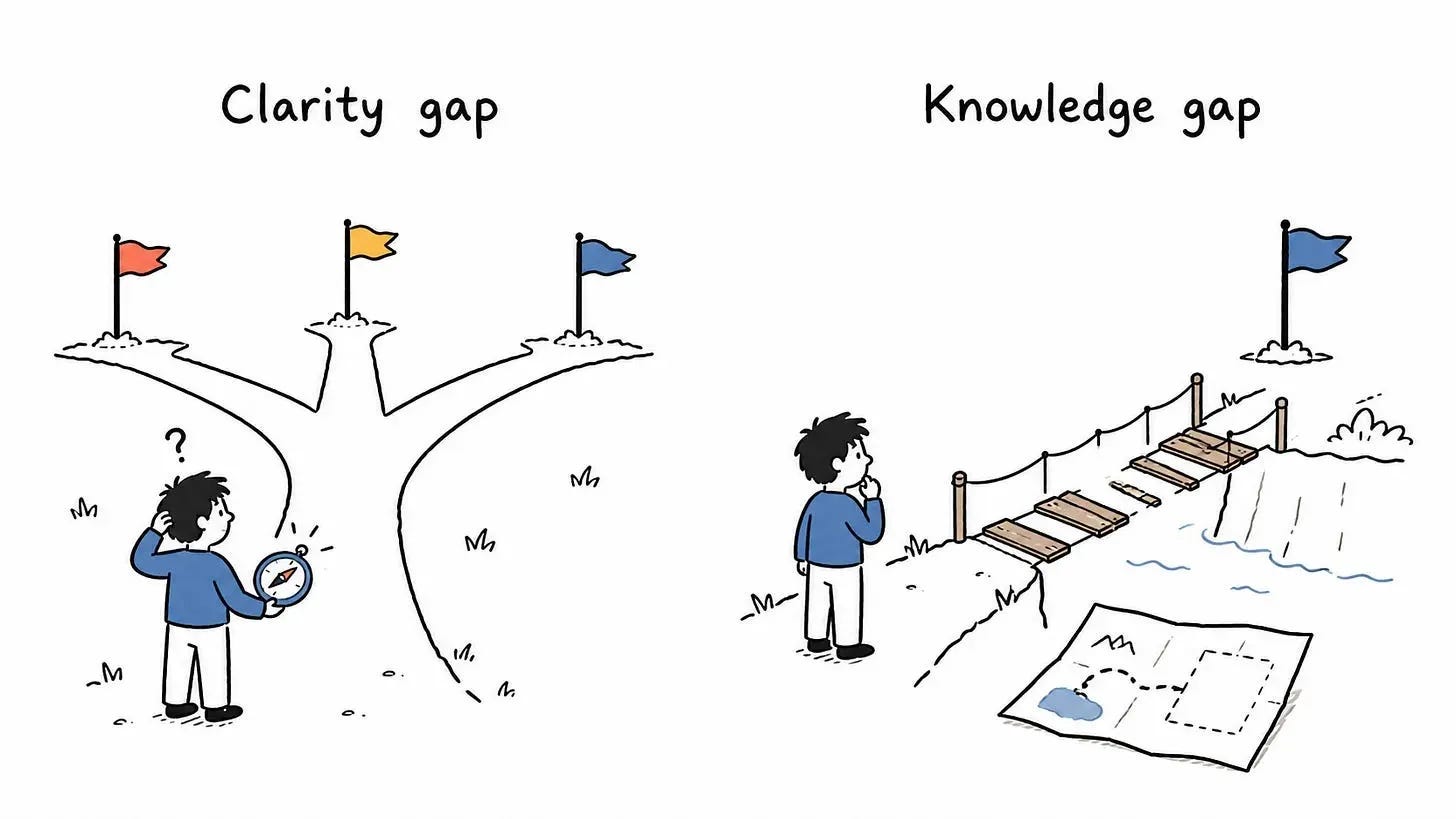
In your day-to-day work, both gaps look like procrastination on your goals. But when you take distance, you find out if you’re clear on what you want in the future and if you have any path that will take you there.
Some problems need continuity, not just more hours.
You may have heard of the 10,000 hours for mastery. It was an idea that anyone who wants to become an expert needs dedication, and 10k hours are for sure a lot of dedication.
But this can be misleading in a given week. I may have worked for 10 hours on my personal projects, or I may have worked 40 hours for my day job, but not all hours are created equal.
Imagine reading only for 6 minutes, repeated 100 times during that week. That’s 10 hours. However, in 6 minutes I won’t be able to get the context and think about what I’m reading. But now think about reading for 10 hours in one or two days, thinking about what you read, and making a decision. I only work on reading for 1 or 2 days instead of the full week, for 10 hours, but I can think about the problem and draw conclusions.
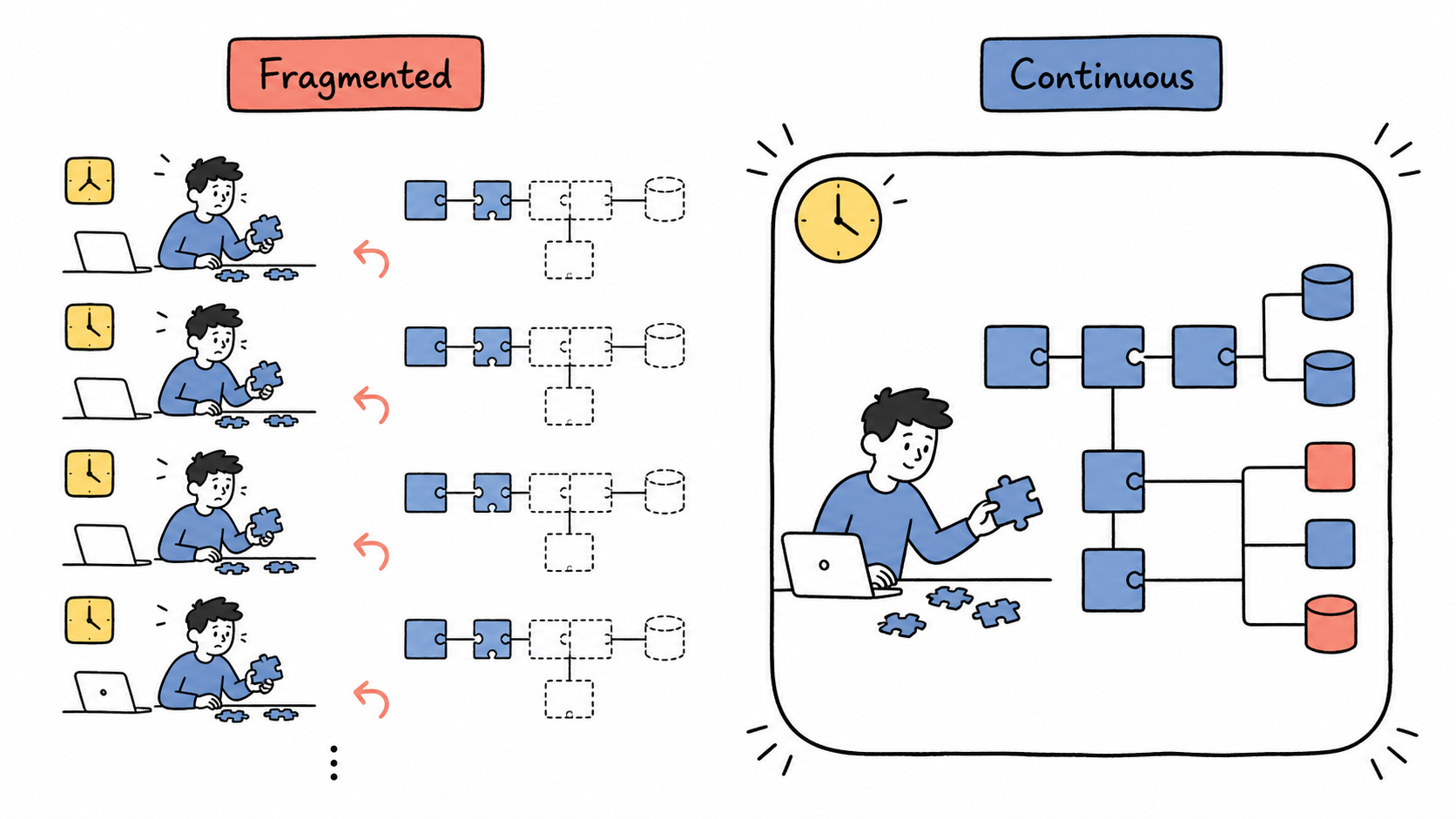
It’s true that spaced sessions help long-term retention of knowledge. And you may come the next day with a fresh mind that solves a problem faster than brute-forcing hours. But each work session needs enough continuity to think about the problem.
While day-to-day you may not have enough time to dedicate a few hours in a row to reading, use your time outside work, weekends, or vacations to grab a book and enjoy the uninterrupted time (it doesn’t have to be a technical book; this is generic advice for anything you’re procrastinating)
You cannot improve a system while you only run it.
While you’re working, your incentives are to fix things with local optimizations (e.g., make something faster) instead of higher-level questions (refactor to simplify).
And this applies to any area in life; I’m sure you have things at home that you’ve postponed because never is the right time to properly fix it.
There’s a story about two lumberjacks who were tasked with chopping as much wood as possible for 4 hours. Each of them had no help from anyone, and their only tool was an axe; both were identical.
The first lumberjack started rushing to chop wood, but they were getting tired as time passed, and their axe was getting dull.
The second lumberjack dedicated the first hour to sharpening their axe, warming up their muscles, and asking someone else about the best technique to chop wood. Then they chopped wood with a much better process, having more results by the end of the 4-hour period.
We are all like the first lumberjack in our day-to-day lives. We are so rushed into doing everything we have to do, at work and in life, that we never stop to sharpen the axe. We don’t even know what the equivalent of sharpening the axe is for ourselves.
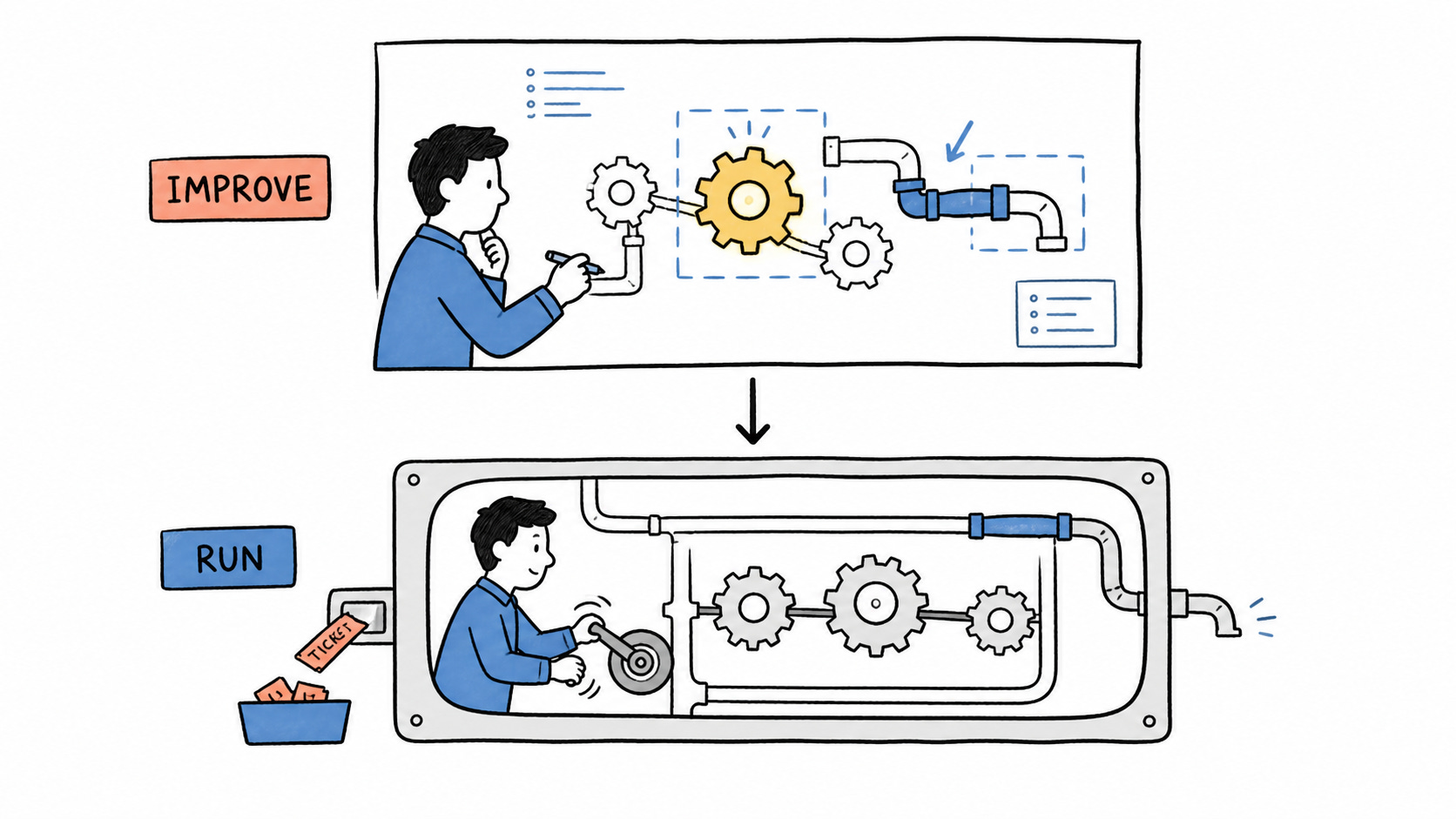
A Think Week creates room to get a higher-level view of your life and work, to fix the root causes and inconveniences, and gain leverage that you’ll be grateful to have once you’re operating in your day-to-day. And even if you think you don’t have anything to improve, reading a book will give you the knowledge to realize how much you can still improve.