

🏆 Black Friday 2026: Grow and get productive next year
For the next few hours only, you can join the paid newsletter on the annual plan for €93.53. This is a special offer to prepare for the unpredictable times that come with AI. Let’s succeed together in 2027 and beyond.
That’s 40% less than monthly pricing, 25% less than annual pricing, and the lowest price after today.
This is why it’s really worth it:
Think of it like this: if what you learn here helps you get one promotion earlier, Levels.fyi data shows a ~42% salary increase. That’s €20k+ to €60k+ depending on your level.
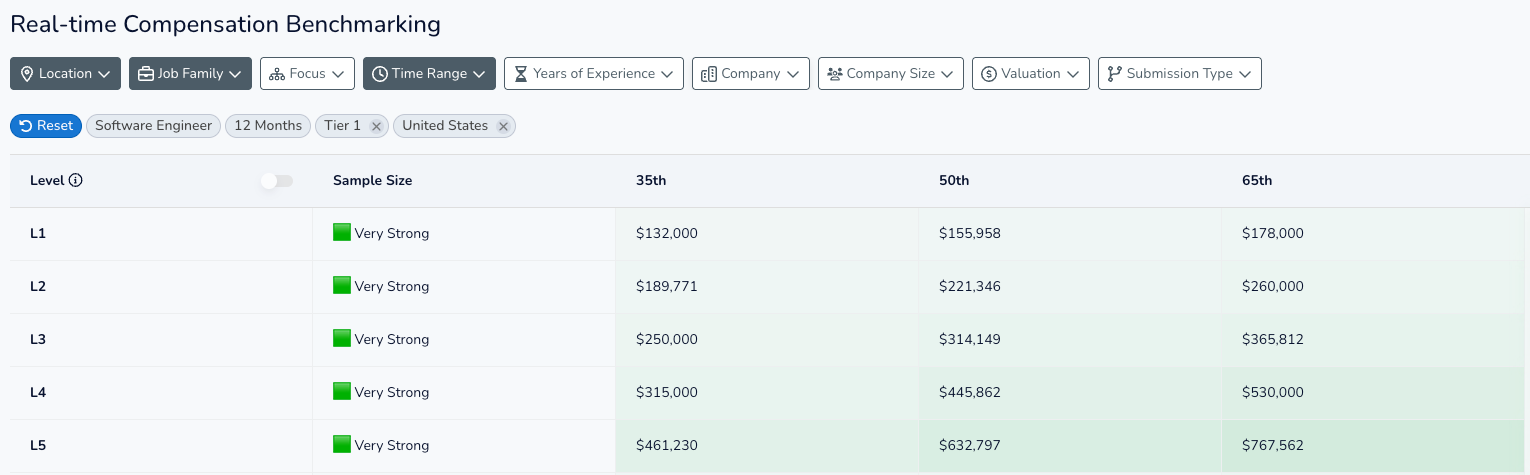
The annual plan is normally €124.70.
Right now, you lock in the next year for €93.53.
Cancel anytime. Substack offers a 7-day refund window after payment.
After a year working in big tech, I knew what it was that I needed to do to get to the next level. I had to own a big design where I'd demonstrate I could be trusted with scope.
The way I knew this was by asking. I asked my manager and peers for feedback. And they not only gave me this info, they also gave me the project to take action on the feedback immediately.
Having this clear portrait in front of me, I went and wrote something very fast. But it was rejected at the beginning.
But now, five years into working in big tech, I've learned some lessons that I didn't know at the beginning. Working fast is great; knowing how to code, or now how to prompt the AI, is better, but they aren't enough.
👉 If this sounds interesting, subscribe now. 22,000+ engineers are already becoming more productive. Paid subscribers have access to premium resources
Tasks vs outcomes: Everybody should own the outcome
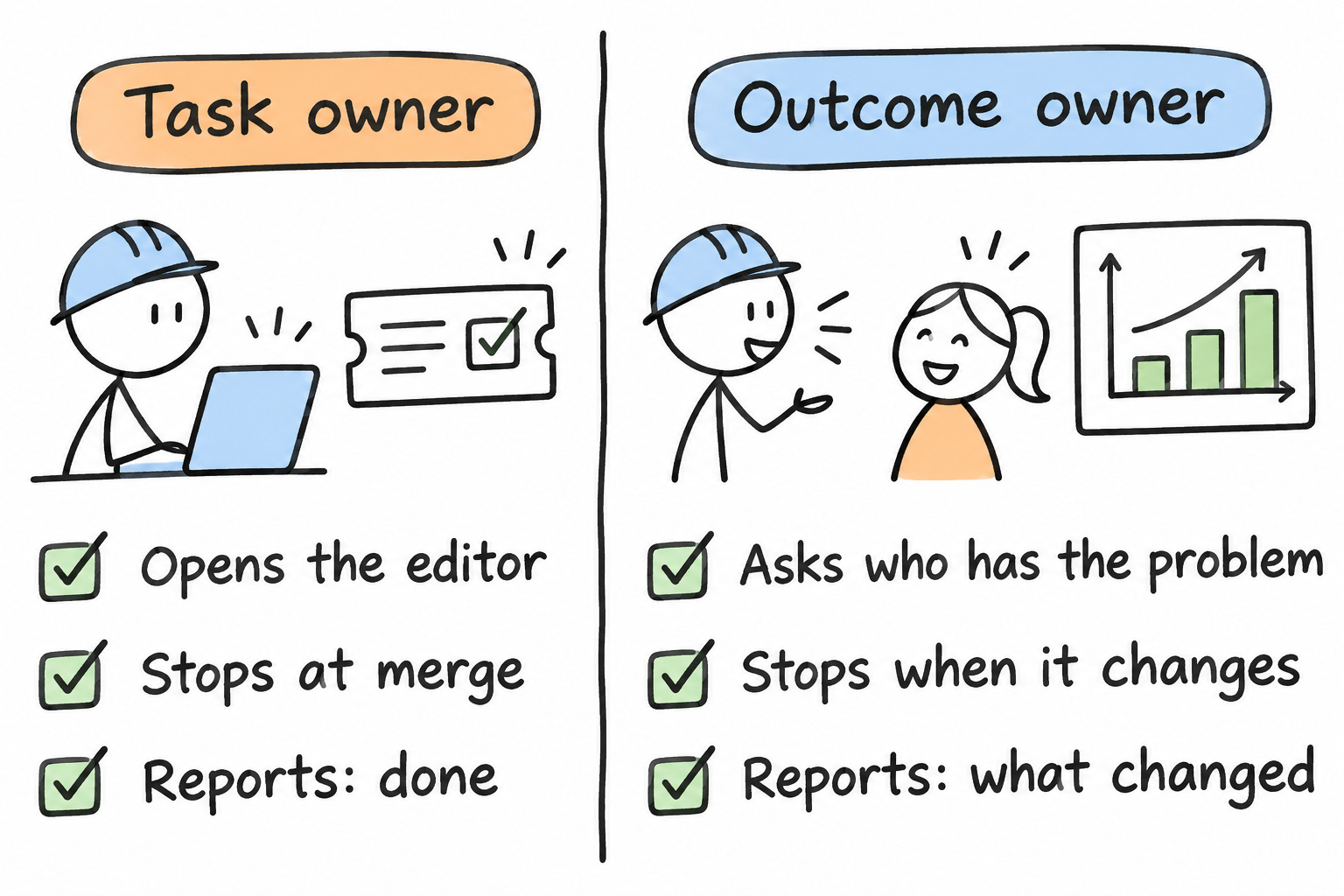
A task is something that someone else defines, and you just have to complete it. But it's not enough to do what someone else decided to do. Most of the time, that "someone else" won't exist.
What people want is an outcome. You are the owner of making that happen, and you can decide how to achieve it. This means that you not only have to actually do it. You have to investigate, compare alternatives, propose something, try them, measure, and get back to step 1.
Especially now that we have AI, there is no longer someone who defines what we have to do and some people who implement that thing. Most of the time, the person who defines it will end up prompting AI to actually do it. This isn't like junior engineers have disappeared. It's more like everybody has to be an owner of an outcome, instead of someone who implements tasks.
For example, an outcome is reducing the latency of an operation. And a task is adding a timeout to a dependency and retries. Nowadays, you can't just implement tasks. That makes you replaceable.
Does AI change how engineers get promoted?
Following up on the tasks vs. outcomes, you will be given tasks in your first week of work. Everybody can do a task. However, people won't give you a big responsibility to make something happen when you are new. And they will give you different responsibilities depending on your level and tenure.
Even before AI, one could argue that it is not about how many commits you merge but about the impact of those commits. So if you wanted to get promoted, you had to focus on the impact instead of doing a lot of work that is low value.
But now that we have AI, the actual value of having someone who can send many commits is extremely low. The real value is who can use AI in order to achieve a bigger impact. It's always been about the impact that someone brings, regardless of the tools.
One of the main challenges is having a bigger problem in their heads, managing AI to solve it, and owning the outcome instead of getting overwhelmed with too many projects and details.
Promoted to Executive Engineer
AI just gave you a team, but nobody trained you to lead it.
In some smaller companies, engineers don't have a clear progression as an IC (Individual Contributor). At some point, a very experienced engineer becomes a manager, and the responsibility is managing people instead of writing code.
I was always very clear that I didn't want to become a manager, so I was very happy to hear that at Amazon I can always stay an IC and still keep getting promoted and owning a bigger scope.
But what I didn't have on my radar was AI. None of us who stayed software engineers are writing code anymore. We went from implementing the code ourselves, and that was our value, to being an orchestrator of agents.
As it happens with people managers, in the end the performance of your team is your problem. Everybody has the same AI tools and allowed AI consumption. However, you will always see some people making better use of it and some other people who got their productivity increased because they are using these AI tools now, but they are still lagging behind the rest of their peers.
That is like saying that they gave five people to each of the executives, and some of them managed to get more performance out of their people. The efficiency of your AI team is your responsibility.
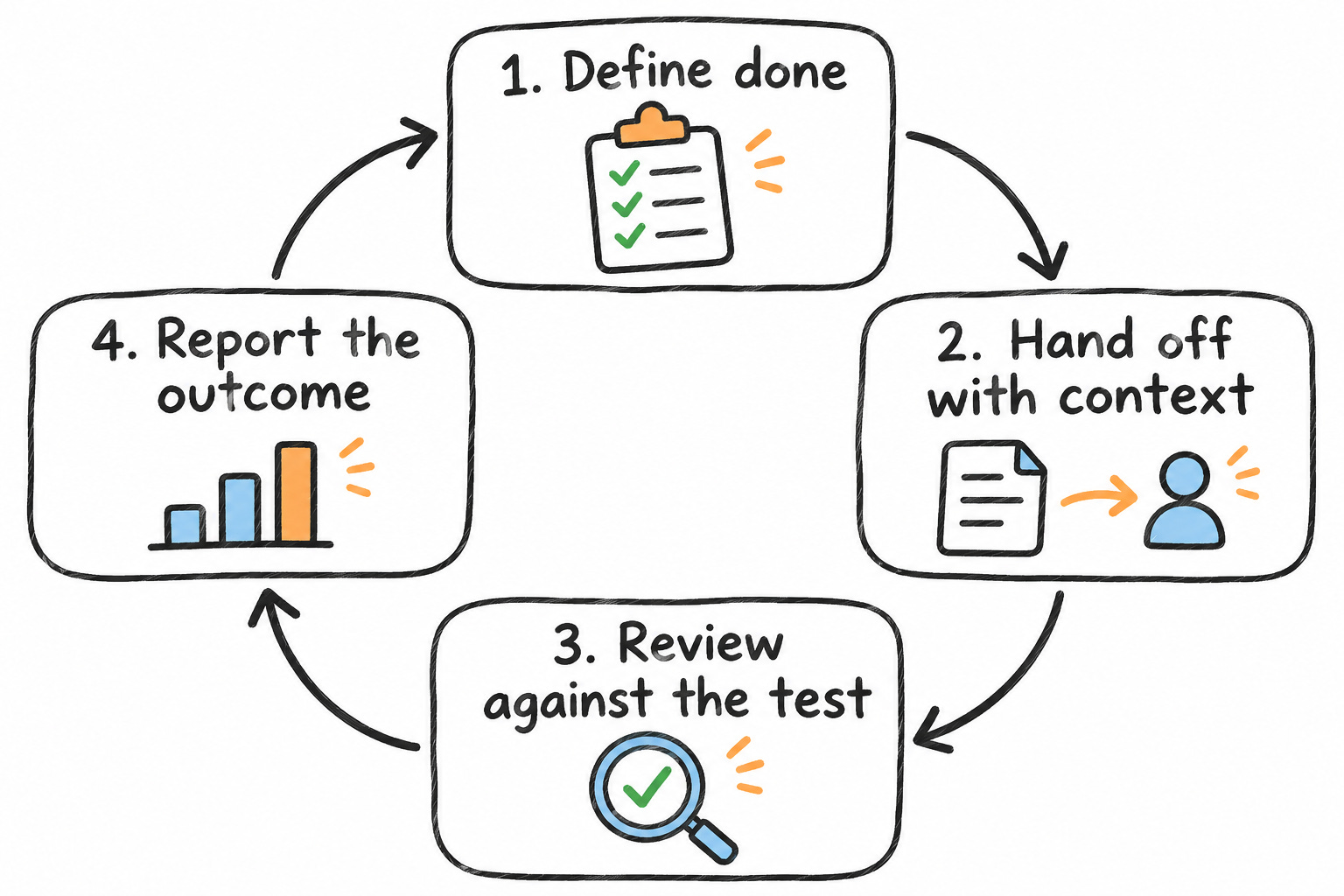
1. Define "done" before the work starts
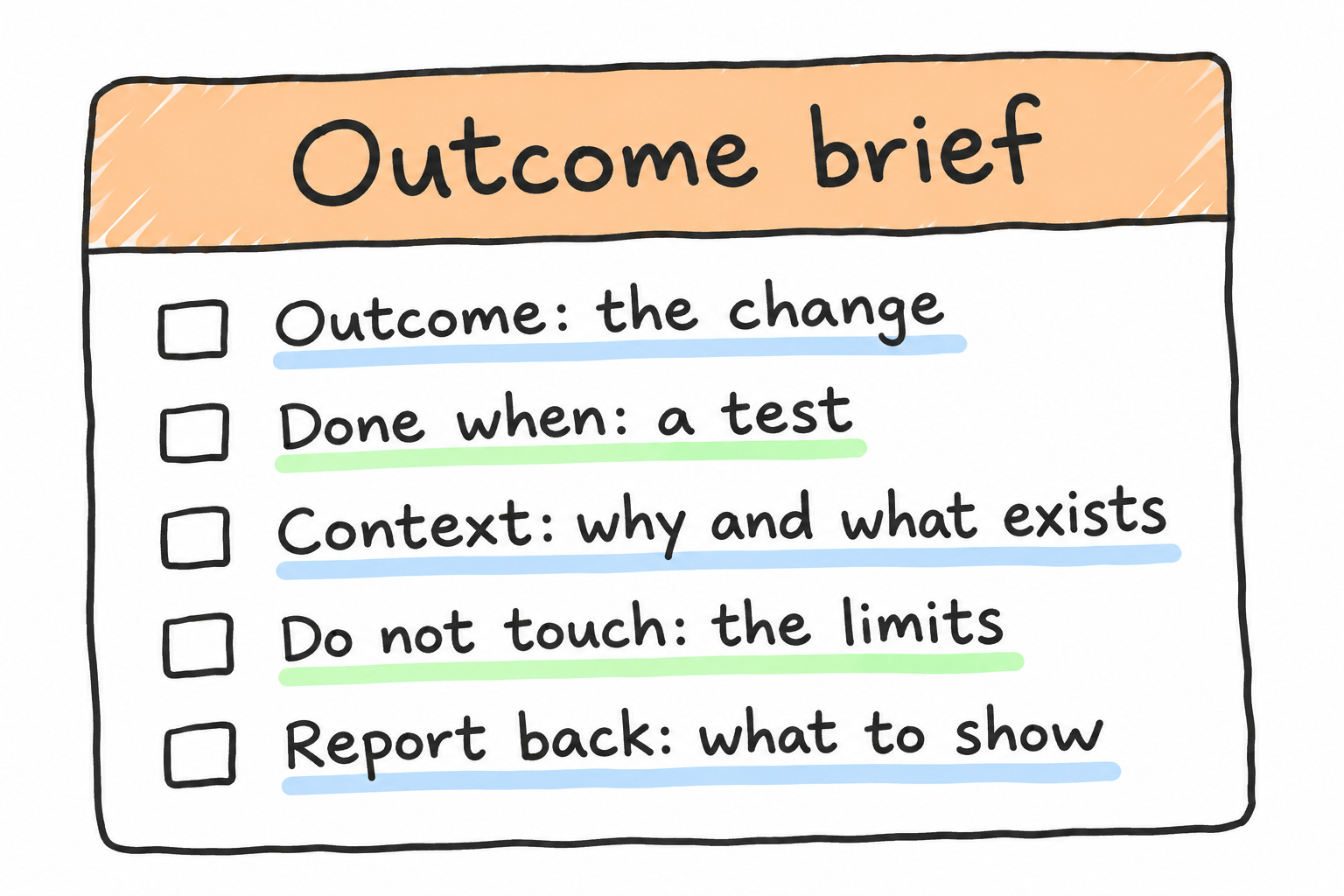
This is about defining the desired outcome. A result.
Maybe you still don't know exactly what it would look like, but you will know some KPI or some functionality that needs to be available.
For example, a reduction in latency, or users able to add products to their cart. The how is an implementation detail that you'll figure out.
If you don't give a goal to the AI, it may misbehave (try the /goal command in your harness if supported).
2. Hand off with context
Asking only for the outcome may have unintended consequences.
This is the typical alignment problem that people understand better with a catastrophic scenario where AI becomes superintelligent. You may tell the AI that you don't want people to die from disease anymore. And AI may decide to kill everybody, so everybody dies by AI and not by disease. And no more people on Earth means no more people dying from disease.
The same happens at a smaller scale with your AI implementing a functionality. It may be implemented, but at the same time it may be completely the opposite of what you wanted it to be.
This is the same with humans. You may have been writing code to have a functionality that a library or an API already provided. Having a piece of information changes the implementation, even if the outcome is achieved.
That's why, with AI getting more and more parts of the software development lifecycle, I'd still suggest that you are at the beginning aligning on a plan, and at the end verifying the outcome.
With the current models, you can trust that AI will implement whatever you agreed to. The important part is iterating on that initial plan so it implements what you actually want.
3. Review against the test, not line by line
In the old days of writing code, there was something called TDD: Test-Driven Development. The idea was that you would write the test first, which would fail because the functionality was not yet implemented. And after that, you would implement the functionality that makes the test pass.
This was good because it ensured that you wrote only the code that you needed to pass the test. And you made sure that each of your tests was important to assert a functionality that needed to be implemented.
One of the first uses that I gave AI was writing the tests, because it was code that was simpler to think about. But we can learn something from TDD. If you can define the functionalities and you can codify them via tests, you can then leave the entire implementation to AI.
Of course, this needs your tests to have not only the functional requirements, but also the non-functional requirements: Tests that assert on the latency under load, assert on the availability when introducing fault injection...
4. Report the outcome
Despite having a lot of AI, and especially now that everyone talks to AI more than they talk to their families, people hate to ask someone and get an AI answering.
But engineers have always had a bad rep for communication skills. This is because we focused too much on the how and the details instead of reporting the outcome.
Now that the AI is handling the how, what we care about is talking at a high level about the outcome or the concepts. We don't care anymore that line sixty-four uses a certain method. What we care about, at a high level, is that an implementation of a token-bucket algorithm for retries will improve the backend resiliency by preventing retry storms.
And if you have data that people can understand, that's even better than talking about the specifics.
To improve your communication, you should:
Talk about what other people think is important instead of what you spend the most time on
Have both a defined outcome where something is considered done and also a stop-loss condition where you will stop putting effort into something that is not giving results. It's very easy to just say "improve the latency of an endpoint," and depending on who takes the task, someone will do a minor improvement that helps very little, and someone else will spend days past what's reasonable to spend.
Don't review everything the same way. Understand where you add value by going into the specific details, and understand where you have to talk at a high level to change a direction. It makes no sense to go into specific details when reviewing a document, and the approach is completely wrong.
You're still on time
Sadly, for many, especially for the people who wanted to live a very relaxed life where humans didn't have to work because everything is automated, AI is not taking our jobs quite yet.
There are many years ahead of us working alongside AI to ship software. But there will always be better and worse software engineers. And if you're reading this, you want to be the best software engineer on your team.
This is why, now that AI is doing implementation, it's more important than ever that you take care of your growth.
There is an interesting concept from Andrej Karpathy about an idea file. The new way of open source is that rather than giving you code that you execute on your machine, we will give you an idea of the specification of requirements so that your AI can implement it.
This is what I'm trying to achieve with this newsletter. I'm giving you the exact ideas or the concepts that you should start adopting in your day job. It's the same as the previous example about implementing something yourself or finding that piece of information that tells you that there is a library or API to do it. One idea from this newsletter at the right time can change your entire career.
If you want not only idea but also the setup that runs my implementation loops, now is the time to get a huge discount. For the next hours only, you can join the paid newsletter on the annual plan for €93.53.
That’s 40% less than monthly pricing, 25% less than annual pricing, and the lowest price after today. This is a special offer to prepare for the unpredictable times that come with AI. Let’s succeed together in 2027 and beyond.
If you found value in this post:
❤️ Click the heart to help others find it.
✉️ Subscribe to get the next one in your inbox.
💬 Leave a comment with your biggest takeaway
♻️ Share it with your peers
This article helps you move from phase two to phase three: use the time you win back to own one outcome at a time, and turn each result into career capital.
I’m building this system below for paid subscribers. Thanks for your continued support!

🗞️ Other articles people like