

We use computers to save us time. Applying the same approach to our careers is not usually the best idea.
There are many approaches to career growth. Most people look into the shortcut that saves them the effort of doing hard skills. There are hundreds of “Learn x framework in 5 minutes” YouTube videos. They help on exploring topics, but you are not learning something to make an impact in your career. If you are reading this, you are out of that group. (Really, reading in the 21st century? You are already ahead in life).
There’s also the hardcore productivity tribe, looking into minimizing the time of each action. I’m one of them, I have so many shortcuts in my keyboard that I can’t type in a coworker’s keyboard without messing up.
When it comes to my career, my approach is not about finding the shortcut to skip a necessary step. Neither it’s about minimizing the time I have to spend until the next promotion. Instead, I think of my career as money.
In investment, this is known as the compound effect. It’s about time in the market, not about timing the market. For our careers, we can maximize the time we are doing critical growth activities by starting early. This is the concept of career capital and deliberate practice from Cal Newport’s book “So Good They Can’t Ignore You“: Do the crucial actions for growth (deliberate practice), consistently, starting early. Over time your career capital will compound.
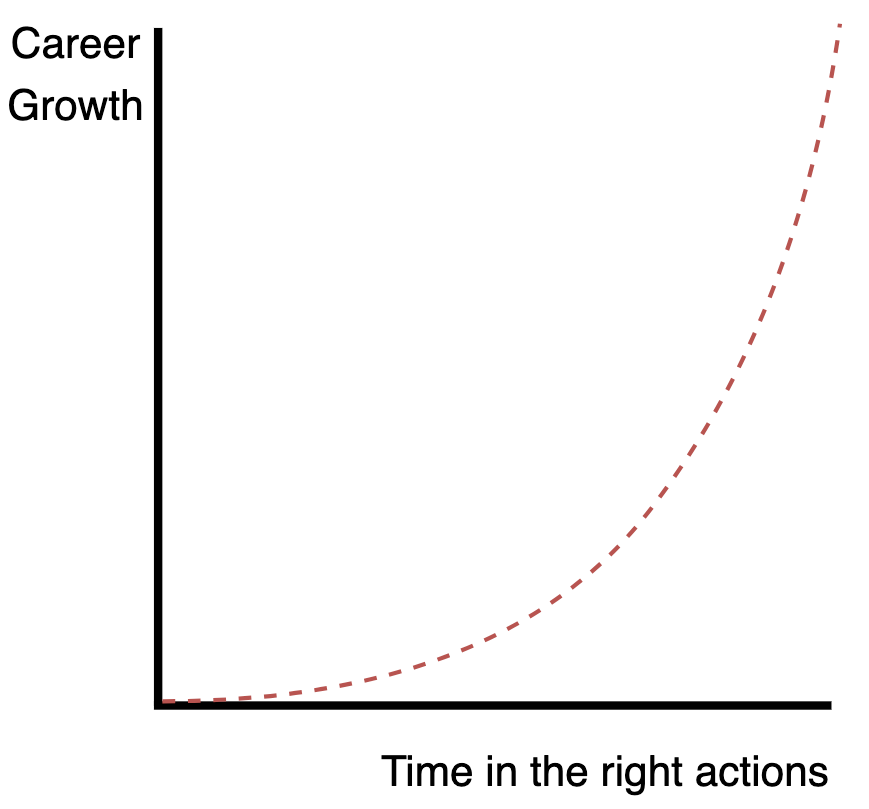
If we focus on minimizing the time for promotion, we’ll be disappointed when external situations cause a delay. Over the span of an entire life, I believe luck gets balanced. But if you zoom in a period of a few months, it will be completely unbalanced.
I was very lucky early in my career. I applied to Amazon and passed my interviews in the last month before they stopped hiring new grads during the summer. If I hadn’t applied then, I estimate 3 months of delay in joining. But a more realistic scenario is that I would have looked for any other job, probably worse, and I wouldn’t have applied again in years.