

Get the free AI Agent Building Blocks ebook when you subscribe:

Despite the U.S. Bureau of Labor Statistics projecting a 17% growth in software development roles from 2023 to 2033, many entry-level positions now require two to three years of experience
I was surprised to learn this. Now new grads need to ramp up faster, they don't have much time to explore by themselves. They need to learn fast from the experience of others. The best way I know to build solid models that speed up your learning is copying.
Every successful software engineer I know started by copying others. This isn't a secret, it's a strategy. At Amazon, where I work, even senior engineers look at how other teams solved similar problems before creating their solutions. The difference between those who advance quickly and those who don't isn't is in how they copy.
In this post you'll learn
How imitation creates a clear starting point
How to choose the right code and patterns to copy from
Common mistakes when copying and how to avoid them
How to turn copied work into original solutions
#1 The science of learning through copying
Your brain learns faster when it has a reference. When I began interviewing, I felt lost until I shadowed experienced colleagues. Their questions served as a guide. I built muscle memory and picked up patterns without starting from scratch. This gave me patterns to recognize, strategies to reuse, and most importantly, confidence that I was heading in the right direction.
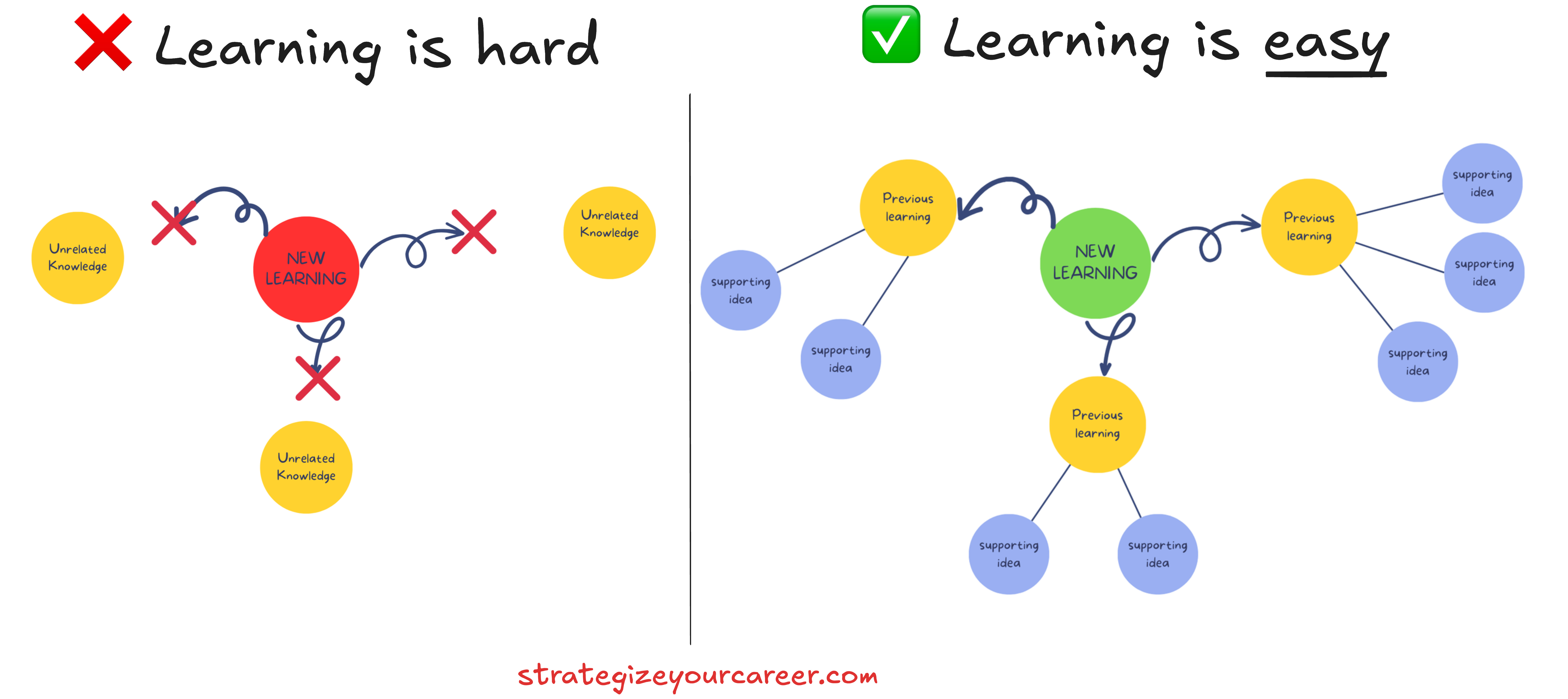
Copying reduces the mental load of starting from zero. Instead of juggling all possible approaches, you begin with a working solution. This lets you focus on understanding why things work, not just what works. You remove the fear of a blank page.
However, copying without thought can backfire. I once copied a checklist from another team without considering our unique needs. I wasted time implementing checks we didn't need. This made me learn that not every template fits every situation. Always evaluate what you copy. Choose examples that match your current context.
Benefits of copying:
Reduced cognitive load
Pattern recognition enhancement
Muscle memory development
#2 Leveraging peer insights & iterative improvement
The strategy for effective copying
Watching peers work can provide a ready-made backlog of ideas. Shadowing others gave me a starting point for further adjustments. Small changes, repeated over time, built my confidence.
Copying won't work when you:
Copy-paste without understanding
Copy outdated patterns
Copy from a different context you don't understand
Another time, I copied security group configurations from another project instead of checking the primary documentation. This led to misconfigured permissions because I didn't understand the context of why those rules existed in the first place. This taught me to be critical about what I copy. Regular review and discussion with peers ensure that you improve on the original work.
The key is to copy smartly:
Start with primary sources, not other teams' interpretations
Understand why something works, not just how
Evaluate if the solution fits your current needs