

Get the free AI Agent Building Blocks ebook when you subscribe:

You probably don’t care about tech influencers telling you about their writing journey.
But you care about improving your writing in your technical documents. Or preparing a presentation at work.
One way or another, we all write. And this post can give you insights to improve it.
Exactly one year ago, I stared at an OKR I set for Q3 2023:
"Code a blog, deploy it, and start writing."
But the reality? I hadn’t done a thing. So, I made a snap decision: I created a Substack account and hit publish that very weekend. And it changed everythin

Why should you care about your writing
Writing is an important skill for learning
Having to write online is a personal forcing function to learn. Without quality inputs, you don’t have quality outputs.
Even without sharing online, when I read books or take courses I take notes.
Before writing online, my notes were a dump of information. They were focused on ease of writing because I was never reading them.
But now writing online has switched me to reading-first. I write to make the reading easy, and that’s harder. In the process of writing this way, I have to reflect more on the information.
Writing will increase your confidence
Sharing your thoughts with the world is intimidating.
Making a technical proposal to your team is scary.
The only way to lose fear is by exposing yourself to these situations long enough.
If you regularly post online, you are iterating faster than if you wait to have the opportunity at work.
3️⃣ A side project will increase your discipline
I have struggled to keep up with writing online during this year. 52 weeks of writing translated to 48 posts. We all have more things in our lives than the side-project.
All-or-nothing thinking is a common human bias. We think that either we go to the gym 5 times a week or better to drop it. The reality is that anything makes progress, and you don’t lose everything if you can’t keep up on busy periods.
If you expose your side project online, writing, or anything else, you have a forcing function to keep doing it.
How to write better
Single responsibility principle of posts (or sections)
A newsletter is a form of social media. Just a bit longer.
When someone reads the post, they are looking for a single, clear learning.
People will perceive you as a better communicator if they get an outcome after reading you, instead of feeling they lost their time reading.
The same happens with an email, a Slack message, or a technical document at work. For emails and Slack messages, think about the outcome you want to communicate first, then write.
For a technical document, give a clear outcome to each section.
Don’t mix ideas and topics. Don’t do spaghetti writing
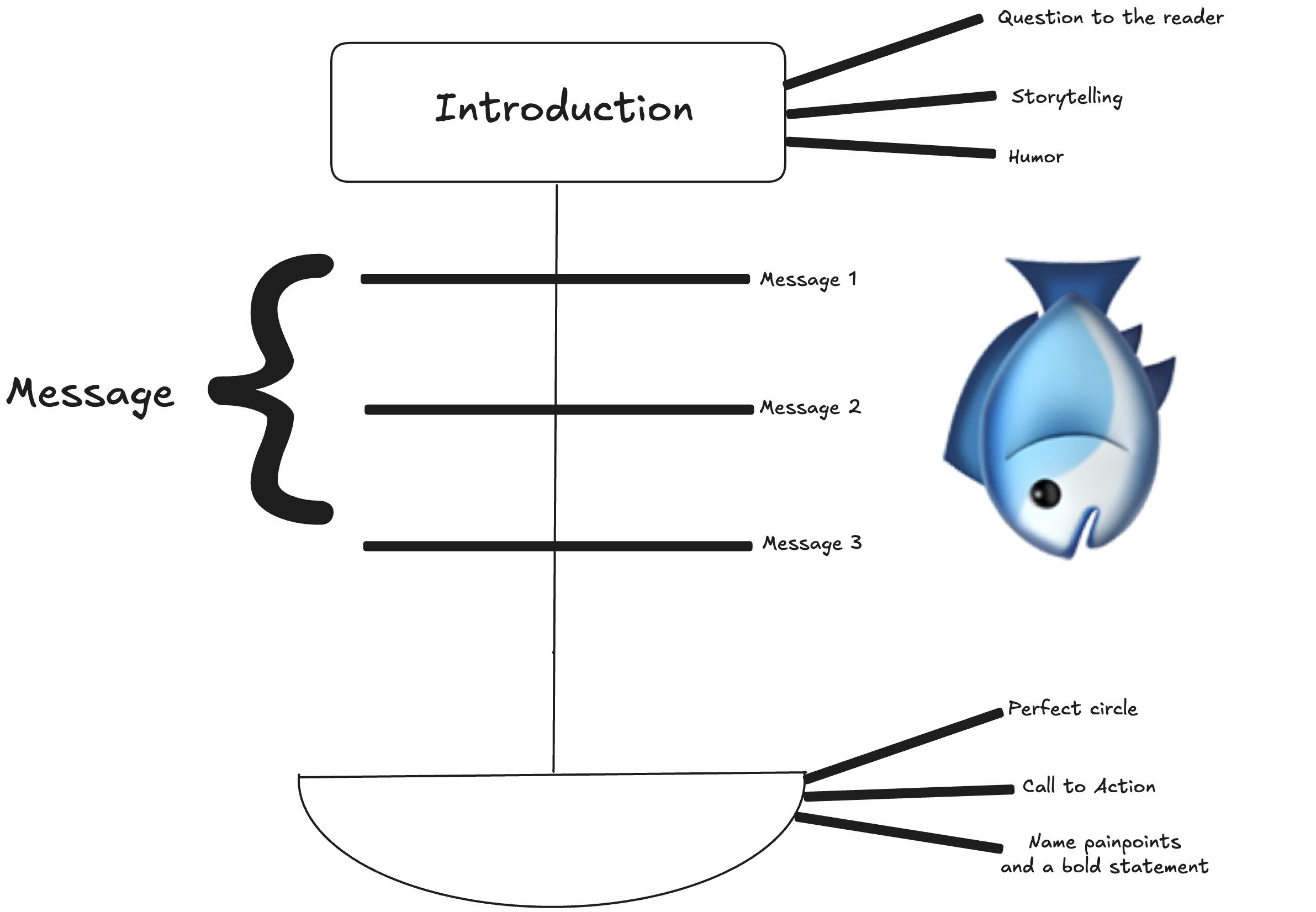
Understand the structure of a post
Part 1 - The hook.
You want to catch people’s attention and let them know if this is for them.
Questions work well as long as you answer the question through the text. Storytelling and humor can also catch attention.
At work, you don’t want to lose your readers' time. Catching attention by letting them know who should read the post will make them engaged. An example:
If you consume the dataset
shopping_orders, this is a mandatory migration for you.